Amara Nwosu

MBCHB FRCP PhD CF SFHEA


Leave a comment

New paper: Understanding barriers and facilitators to palliative and end-of-life care research

New paper published in @BMC Palliative Care. Please read and share widely!

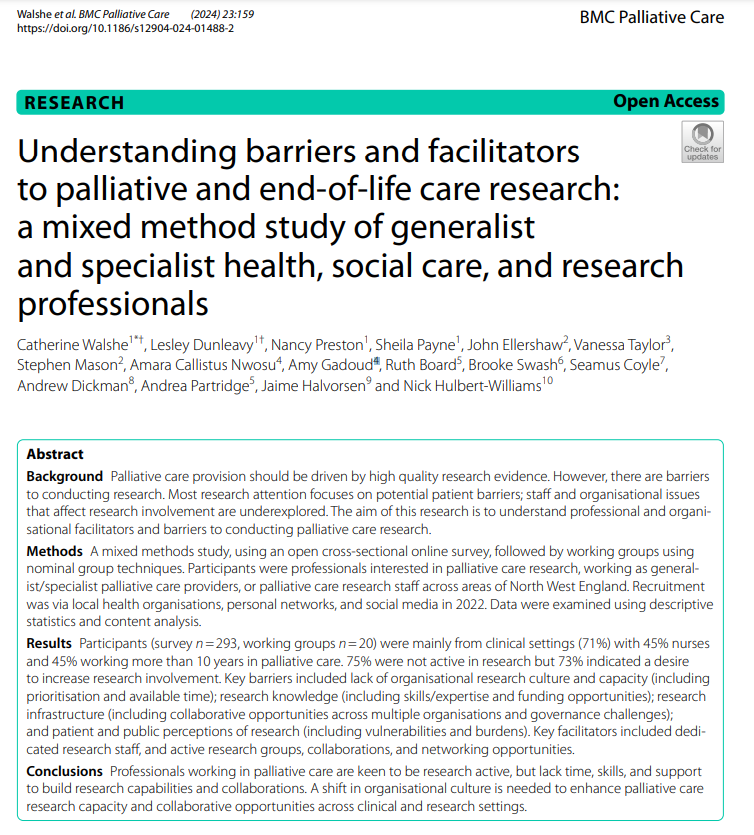
Understanding barriers and facilitators to palliative and end-of-life care research: a mixed method study of generalist and specialist health, social care, and research professionals

“Professionals working in palliative care are keen to be research active, but lack time, skills, and support to build research capabilities and collaborations. A shift in organisational culture is needed to enhance palliative care research capacity and collaborative opportunities across clinical and research settings.”

Does this describe you? How can we improve resarch capacity in palliative care?

Paper here

https://bmcpalliatcare.biomedcentral.com/articles/10.1186/s12904-024-01488-2


Leave a comment

Completion of my Churchill Fellowship report: Advancing Palliative Care: Artificial Intelligence and Design Insights from the USA and the Netherlands

I am delighted to share the report from my Churchill Fellowship which has been published online today. In 2023 I travelled to the USA and the Netherlands to research applications of artificial intelligence in palliative care.

Title

Advancing Palliative Care: Artificial Intelligence & Design Insights from the USA and the Netherlands

In addition to my written report, I have also made a YouTube video and podcast. I also include my keynote talk from 2023 Hospice UK conference.

Report

https://churchillfellowship.org/ideas-experts/ideas-library/advancing-palliative-care-ai-and-design-insights-from-the-usa-and-the-netherlands/?fbclid=IwZXh0bgNhZW0CMTAAAR0gMHiUNrGHjtO_-Mw-GO-pqj_-Q46wym3EXsHqIQ2Y4NRTkA10MLwYhX0_aem_FuWfM5HHGrrhFxULAI5krA

Video

Podcast

Keynote talk


Leave a comment

Telehealth requires improved evidence to achieve its full potential in palliative care

I have written an Editorial for the Palliative Medicine journal about the unrealised potential of palliative care telehealth. In the Editorial, I discuss the opportunities and challenges associated with telehealth; I also describe the next steps needed for research to evaluate palliative care telehealth.

I have also recorded a podcast to summarise the Ediorial. The article and podcast are freely available from the links below:

Click here to access the published Editorial

Click here to access the podcast


Leave a comment

Marie Curie Hospice Liverpool win the ‘Culture for Innovation Award’ at the North West Coast Research and Innovation Awards 2023

We are delighted to announce that Marie Curie Hospice Liverpool, in partnership with the Inclusionaries Lab, has won a prestigious award at an event recognising the best innovators and researchers in health and care in Cheshire, Merseyside, Lancashire and South Cumbria.

The North West Coast Research and Innovation Awards is the only health awards event for the region, run by three NHS bodies focussed on research and innovation. The Culture for Innovation Award was presented to Marie Curie Hospice Liverpool (in partnership with the Inclusionaries Lab, University of Liverpool) in recognition of the innovative ‘Designer in Residence’ project, which involves hosting a designer (Andrew Tibbles) in Marie Hospice Liverpool for a year, to research how design methods can improve future palliative care. This project has resulted in the opening of a temporary Research Hub in the clinical area of Marie Curie Hospice Liverpool, the creation of a prototype phone installation to capture people’s experiences of hospice care, and the development of future work to explore how design can support future digital legacy research.

Marie Curie Hospice Liverpool win the CULTURE FOR INNOVATION Award. North West Coast Research and Innovation Award 2023 at The Spine Liverpool.

Left to right: Dr Laura Chapman (Medical Director and Consultant in Palliative Care, Marie Curie Hospice Liverpool), Sarah Stanley (Research Nurse, Marie Curie Hospice Liverpool), Dr Amara Nwosu (Senior Clinical Lecture in Palliative Care, Lancaster University; Honorary Consultant in Palliative Care, Liverpool University Hospitals NHS Foundation Trust; Research Lead, Marie Curie Hospice Liverpool), Andrew Tibbles (PhD Design student, the Inclusionaries LabUniversity of Liverpool), Hayley Hawkins (Deputy Head of Operations, Marie Curie Hospice Liverpool).


Commenting on the award, Dr Amara Nwosu (Senior Clinical Lecture in Palliative Care, Lancaster University; Honorary Consultant in Palliative Care, Liverpool University Hospitals NHS Foundation Trust; Research Lead, Marie Curie Hospice Liverpool) said “We are delighted to be the first palliative care winner of an award from North West Coast Research and Innovation Awards. Palliative care is an essential component to effective healthcare systems; we are proud that our innovative work to use design methods to shape palliative care services has been acknowledged through this wonderful award”.

Hosted by the Innovation AgencyClinical Research Network North West Coast (CRN NWC); and Applied Research Collaboration North West Coast (ARC NWC) the event attracted around 180 entries, of whom 36 were shortlisted in 12 categories. 

Special guest Professor Sir Stephen Powis, Medical Director of the NHS, said: “Every challenge we face is an opportunity to learn, collaborate and embrace new approaches to deliver improvements in the services we provide, for the benefit of patients, staff and the wider NHS. 

“As the NHS looks forward to its 75th birthday on 5th July, it is a good time to reflect on its journey and on the incredible research and innovation milestones that have transformed patient outcomes and that will help to build an NHS that is fit for the future.” 

The event took place at The Royal College of Physicians, The Spine in Liverpool, hosted by BBC TV North West and Breakfast presenter Roger Johnson. The full list of winners is below; to find out more about their entries, visit www.nwcawards.co.uk.  

WINNERS 2023

Culture for Innovation Award: Marie Curie Hospice Liverpool

Innovation in Workforce Development Award: Health Education England NW; Lancashire and South Cumbria NHS Foundation Trust; University of Central Lancashire

Patient Safety and Care Improvement Award: Liverpool University Hospitals NHS Foundation Trust and Innovation Agency

Research Student of the Year Award: Piotr Teodorowski, University of Liverpool

Ruth Young Award for Research Implementation: Liverpool Heart and Chest Hospital NHS Foundation Trust

Outstanding Contribution to Patient and Public Involvement Award: Lancaster University

Research Delivery Team of the Year Award: Warrington and Halton Teaching Hospitals NHS Foundation Trust

Research Collaboration of the Year Award: Marine Lake Medical Practice and Wirral University Teaching Hospital NHS Foundation Trust

Primary Care and/or Community Research Team of the Year Award: Lancaster Medical Practice

Unsung Hero: NHS 75th Anniversary Award: Sue Smith of One Wirral CIC

Tackling Health Inequalities Award: Liverpool John Moores University; University of Liverpool; Edge Hill University

Sustainability Award: Liverpool University Hospitals NHS Foundation Trust, Broadgreen University Hospital


Leave a comment

My Churchill Fellowship begins!

Hello, my name is Dr Amara Nwosu, I am a Senior Clinical Lecturer (Lancaster Medical School) and Honorary Consultant in Palliative Medicine (Liverpool University Hospitals NHS Foundation Trust and Marie Curie Hospice Liverpool). In 2020, I was awarded a Churchill Fellowship to visit the U.S.A and the Netherlands to research how technology, data and design can support healthcare for people who with serious illness. My Churchill Fellowship is supported my Marie Curie.

The Churchill Fellowship

The Churchill Fellowship is an overseas travelling fellowship to support UK citizens to travel the world in search of innovative solutions for today’s most pressing problems. The Churchill Fellowship was founded by public donation in 1965 as the living legacy of Sir Winston Churchill for the UK.

The aim of my Fellowship

I aim to research how technology, data and design can support healthcare for people who with serious illness. This is because the UK population is ageing and palliative care need will increase by 42% by 2040; demand for care wil be challenging for NHS to meet without innovation. Palliative care need in the UK has been exacerbated by the impact of the COVID-19 pandemic. When used well, digital health improves access to healthcare services; however, many barriers prevent meaningful use of these technologies in the UK. Through this Fellowship, I will travel to the Netherlands (Erasmus Medical Center, Rotterdam; Delft University of Technology (TU Delft), Delft and IKNL, locatie Utrecht) and the USA (Dana Farber Cancer Institute, Harvard University, Boston) to meet professionals from a variety of disciplines who are using applications of design, technology and data in palliative care that can benefit the UK.

My travels (eventually) begin!

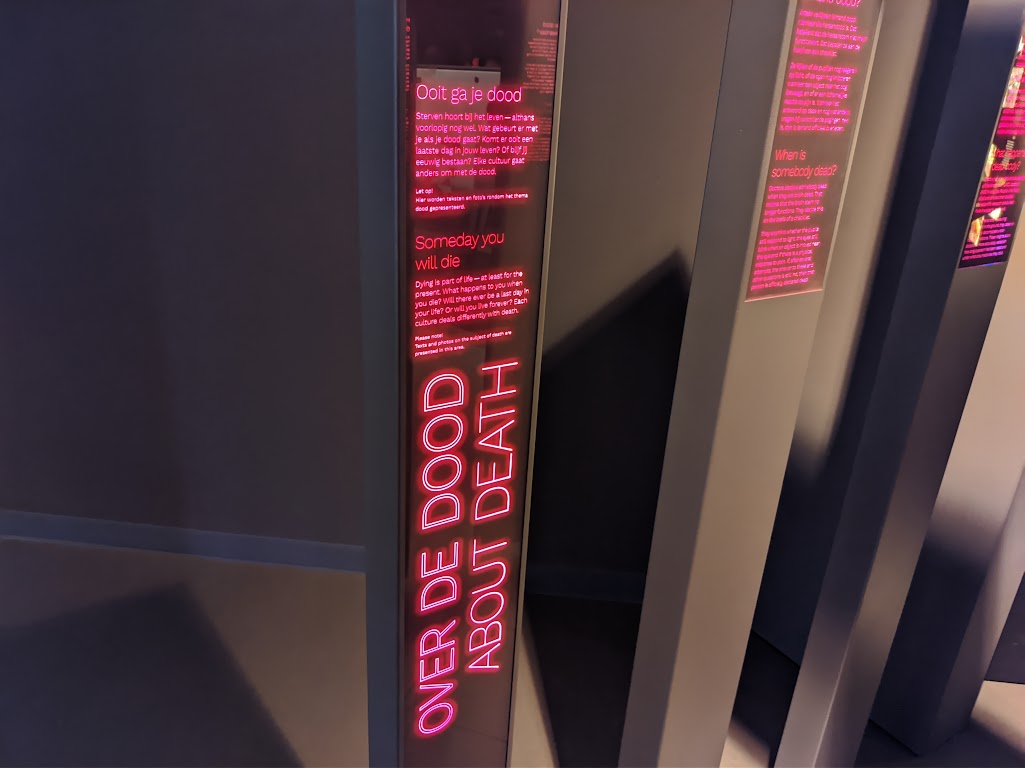
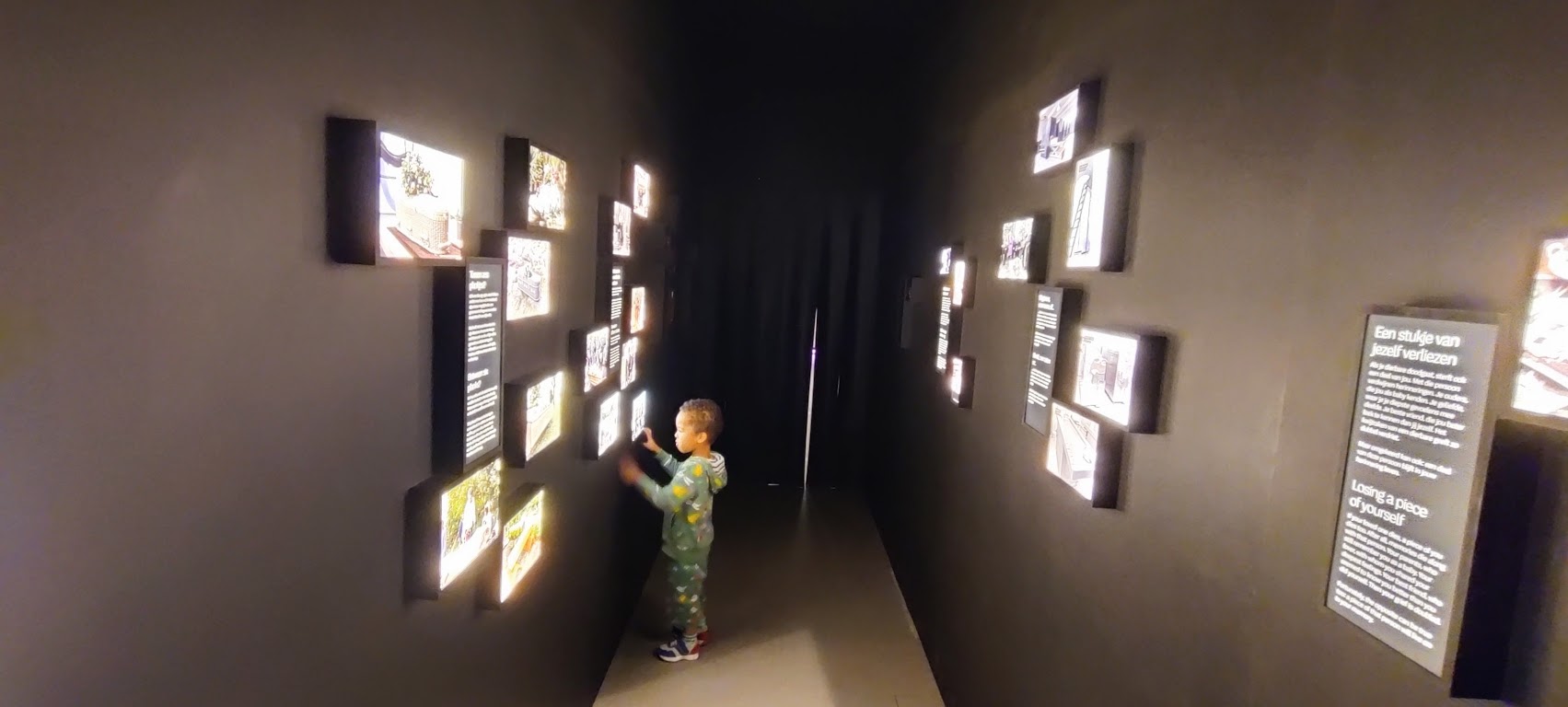
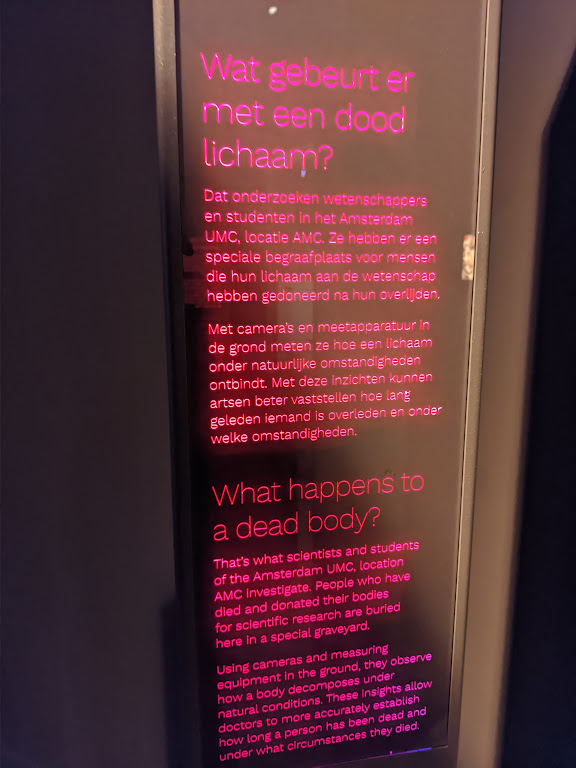
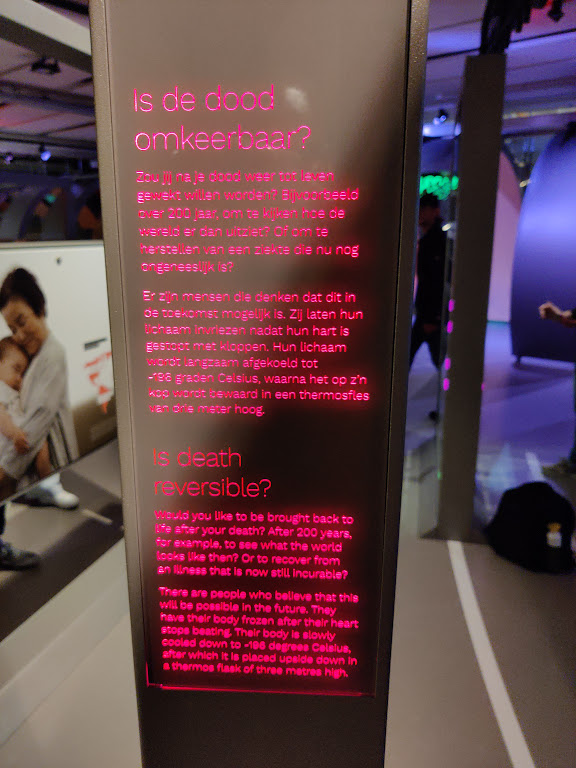
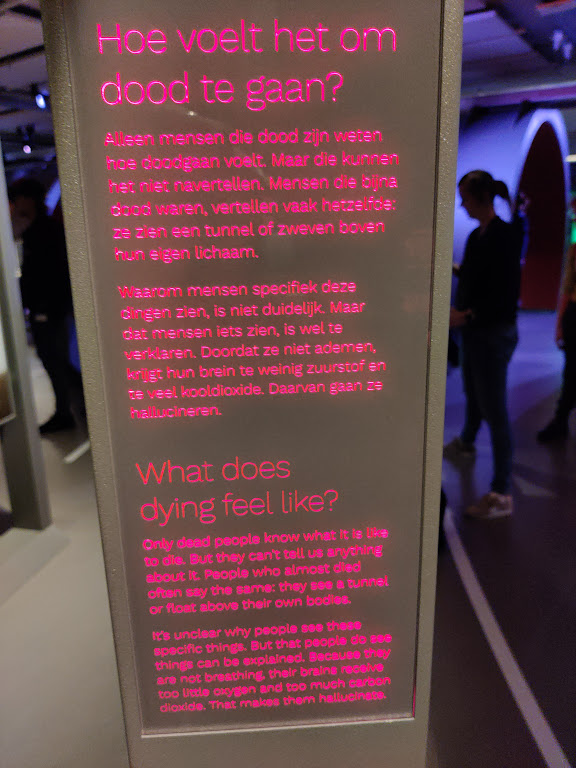
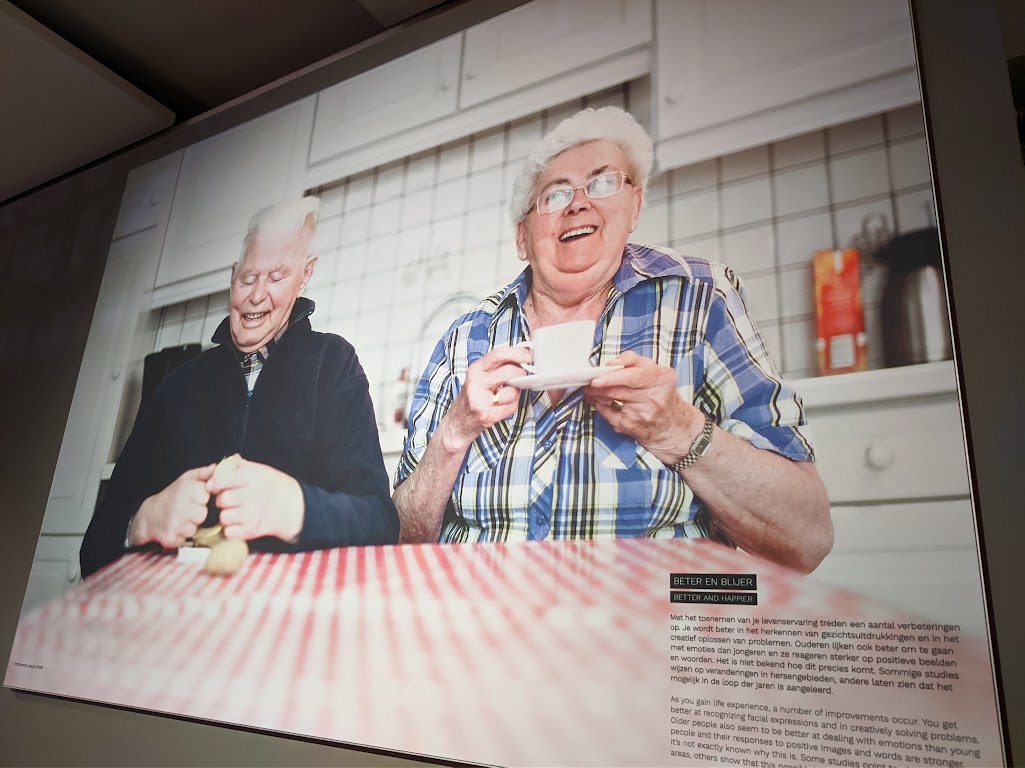
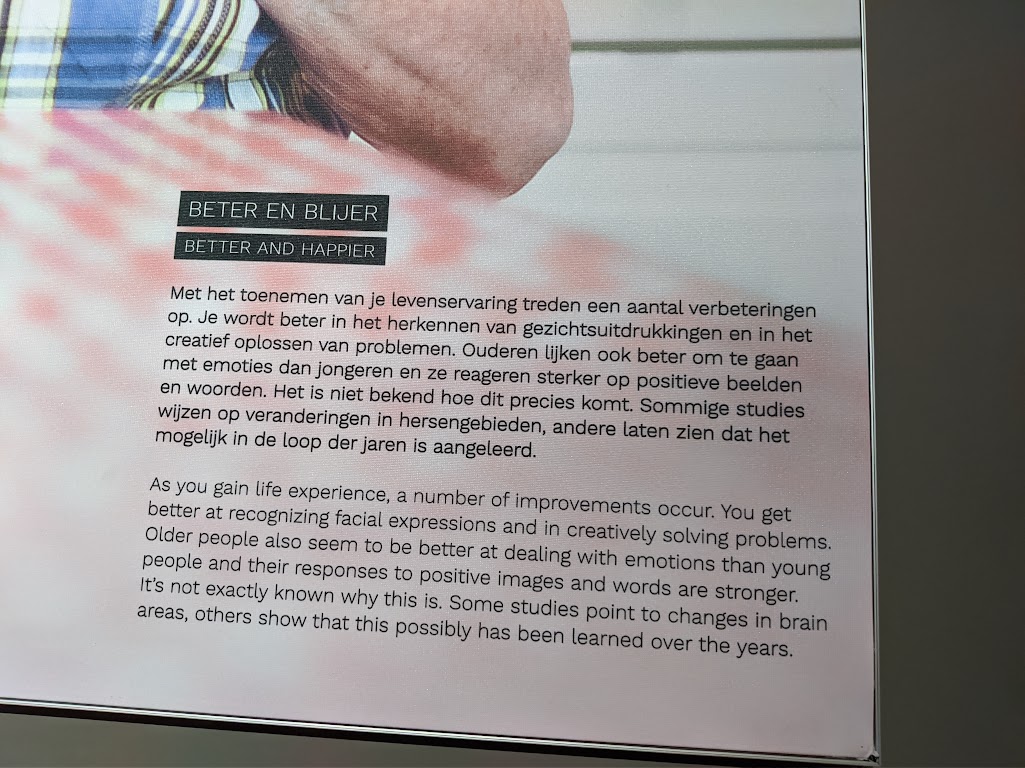
The My trip has been delayed due to the COVID19 pandemic, but I have finially commenced my trip to the Netherlands in May 2023! Firstly, I visited the Nemo Science Museum in Amsterdam which housed a fantastic exhibition about death and dying. The section titled ‘Over de dood’ (About Death) takes people through a journey about people’s views and experiences of death and dying from different cultural perspectives. The exhibition uses a mix of text, images and lighting to provide a thoughtful and emotional experience about death and dying, from a societal and human persepctive rather than a medical one. I really loved the design of the exhibition, with its inclusion within a family science musuem but also located within the ‘Hoe word ik ouder’ (How will I age?) section of the musuem, which presented positive messages about aging.

Next stop is to visit Delft University of Technology (TU Delft), where I will deliver a seminar about my research and will meet designers and engineers to learn about their excellent work.

I will provide updates about my progress in further blogs and I will record a podcast to summarise the findings of my trip.

My Research interest

  • The evaluation of technology to support care for patients with advanced disease.

Examples of my interests for the fellowship

  • Telehealth
  • Architecture and design in healthcare / palliative care
  • Technology to support care in serious illness
  • Design in healthcare and palliative care
  • Digital legacy (e.g., how digital data is managed after death)
  • Virtual reality
  • Social robotics and healthcare / palliative care
  • Use of mobile devices, apps, wearable devices to support healthcare /palliative care

Selected publications

Nwosu AC, McGlinchey T, Sanders J, Stanley S, Palfrey J, Lubbers P, Chapman L, Finucane A, Mason S
Identification of Digital Health Priorities for Palliative Care Research: Modified Delphi Study
JMIR Aging 2022;5(1):e32075

Nwosu AC, Mills M, Roughneen S, Stanley S, Chapman L, Mason SR. Virtual reality in specialist palliative care: a feasibility study to enable clinical practice adoption. BMJ Supportive & Palliative Care Published Online First: 17 February 2021. doi: 10.1136/bmjspcare-2020-002327


‘Designer-in-Residence’ Programme launched at Marie Curie Hospice Liverpool

Designing the ‘Hospice of The Future

Marie Curie Hospice Liverpool are delighted to welcome two design researchers from the University of Liverpool to conduct a project to design the future of hospice care.

Andrew Tibbles (right) is a Ph.D. researcher in Design for End of life and Dr Farnaz Nickpour (left) is an Associate Professor in Design & Innovation. 

Andrew and Farnaz will be ‘Designers in Residence’ in Marie Curie Hospice Liverpool for a year, where they will study all areas of the hospice. The aim of the Designer-in-Residence programme is to co-define and co-imagine current and future hospice care as an ecosystem of people, objects, environments, technologies, practices and narratives of care. The programme has three distinct objectives and deliverables respectively:

a) co-creating a systems map of the current hospice care;

b) co-defining key values, requirements and challenges in the current system; and

c) co-imagining new value propositions in future hospice care systems.

You can find out more about the work of Dr Farnaz Nickpour and Andrew Tibbles, by visiting the website of their Design Research Lab: www.inclusionaries.com


Leave a comment

Development of ‘use-cases’ for a digital palliative care bereavement service [new study for 2022]

We are delighted that our research funding application to develop ‘use cases’ for digital palliative care bereavement service was successful. The project will be funded by Liverpool Clinical Commissioning Group and is part of the Research Capability Funding stream.

We will aim to conduct the study in 2022. The lay summary is below.

Please contact me on Twitter @amaranwosu for further information:

Lay Summary

Grief, bereavement and the need for bereavement services

Grief is a natural process, in which many people will cope with help from their friends and family. However, many people will need professional help.1-3 People who are bereaved are more likely to have problems with their mental health and wellbeing. 4-6 These problems can affect many people in society.7-9 Therefore, good bereavement care is important to ensure that people get the support they need when they are grieving.3

Challenges facing bereavement services

There are many challenges to delivering bereavement care, these include:

  • There is not enough resources to meet current demand.10 
  • Some people may not easily receive support because they live in an area where there are few services.11 
  • Some people struggle to find time to receive support during working hours due to their other commitments.
  • The COVID-19 pandemic has increased demand and has made it difficult for people to access services.3 2 
  • Palliative care need is increasing and is expected to increase by 42% in 2040, this will also increase need for bereavement support.12

Can digital bereavement services help more people receive support?

It is possible technology can be used to help more people to access bereavement support.13 However, it is important we carefully design these systems so they work properly.

In this project we will create the ‘blueprint’ needed to design a new digital bereavement serviceIn this study we will interview staff and caregivers about bereavement support, to understand what a digital bereavement service should look like. We will use this information to design the ‘blueprint’ which is needed to design a new digital bereavement support service. In computer science this ‘blueprint’ is called a ‘use-case’.14 15 We will partner with computer developers to design ‘use-cases’ which we can then use to build a digital bereavement service. After this study we will do more research to test whether the new digital bereavement service is helping more people to get the support they need.

References

1. Aoun SM, Breen LJ, Howting DA, et al. Who needs bereavement support? A population based survey of bereavement risk and support need. PloS one 2015;10(3):e0121101.

2. Pattison NA, White C, Lone NI. Bereavement in critical care: A narrative review and practice exploration of current provision of support services and future challenges. Journal of the Intensive Care Society 2020:1751143720928898.

3. Harrop E, Selman L, Farnell D, et al. 6 End of life and bereavement experiences during the COVID-19 pandemic: Interim results from a national survey of bereaved people. BMJ Supportive & Palliative Care 2021;11:A3-A3.

4. Guldin M-B, Vedsted P, Zachariae R, et al. Complicated grief and need for professional support in family caregivers of cancer patients in palliative care: a longitudinal cohort study. Supportive care in cancer 2012;20(8):1679-85.

5. Wittouck C, Van Autreve S, De Jaegere E, et al. The prevention and treatment of complicated grief: A meta-analysis. Clinical psychology review 2011;31(1):69-78.

6. Stroebe M, Schut H, Stroebe W. Health outcomes of bereavement. The Lancet 2007;370(9603):1960-73.

7. Birrell J, Corden A, Macduff C, et al. Socio-economic costs of bereavement in Scotland: main study report. 2013

8. van den Berg GJ, Lundborg P, Vikström J. The economics of grief. The Economic Journal 2017;127(604):1794-832.

9. Genevro J, Miller T. The emotional and economic costs of bereavement in health care settings. Psychologica Belgica 2010;50(1-2)

10. Harrop EJ, Goss S, Farnell DJ, et al. Support needs and barriers to accessing support: Baseline results of a mixed-methods national survey of people bereaved during the COVID-19 pandemic. medRxiv 2021

11. Wakefield D, Fleming E, Howorth K, et al. Inequalities in awareness and availability of bereavement services in north-east England. BMJ Supportive & Palliative Care 2020

12. Etkind SN, Bone AE, Gomes B, et al. How many people will need palliative care in 2040? Past trends, future projections and implications for services. BMC Medicine 2017;15(1):102. doi: 10.1186/s12916-017-0860-2

13. Morris SE, Ryan AK. Bereavement via Zoom during COVID-19. Journal of psychosocial oncology 2021:1-4.

14. Cockburn A. Writing Effective Use Cases. https://books.google.co.uk/books?id=TUZsAQAAQBAJ: Addison-Wesley 2001.15. Clausen M, Apel R, Dorchain M, et al. Use Case methodology: A progress report. Energy Informatics 2018;1(1):273-83.

15. Clausen M, Apel R, Dorchain M, et al. Use Case methodology: A progress report. Energy Informatics 2018;1(1):273-83.


Leave a comment

Digital health priorities for palliative care research

We have deposited our paper “Technology in Palliative Care (TIP): the identification of digital priorities for palliative care research using a modified Delphi method” on the medRxiv preprint server (ahead for formal peer reviewed publication)

The aim of this study was to identify research priority areas for digital health in palliative care.

This is first study to identify digital health research priorities for palliative care and provides guidance for researchers, funders and policy makers to consider areas for future research and development. 

We identified 16 research priority areas for technology in palliative care, representing 8 themes of big data, mobile devices, telehealth, virtual reality, artificial intelligence, the smart home, biotechnology and digital legacy.  Our findings will support researchers, clinicians and policy makers to improve the evidence base in these areas, through further research and development. This work is timely and important, as global palliative care need is increasing but there is a lack of evidence of how digital health can be meaningfully used to support care needs of people with advanced illness.  Therefore, it is important that the risks of using these technologies in palliative care are properly addressed to ensure that these tools are used meaningfully, wisely and safely and do not cause unintentional harm

The pre-print is freely available from the following link. Please note, that this has not been peer reviewed so should not yet be used to guide clinical practice.

Nwosu AC, McGlinchey T, Sanders J, Stanley S, Palfrey J, Lubbers P, Chapman L, Finucane A, Mason S. Technology in Palliative Care (TIP): the identification of digital priorities for palliative care research using a modified Delphi method. Medrxiv 2021. https://doi.org/10.1101/2021.06.24.21259307

health technology design, vector illustration eps10 graphic


Leave a comment

AmiPal Podcast: Renal Medicine and Palliative Care – Interview with Dr Hannah Sammut – episode 19

In this episode of AmiPal I talk with Dr Hannah Sammut (Renal Physician and Royal College of Physicians post-CCT fellow in Palliative Medicine) about the importance of palliative medicine and palliative care.


The prevalence of symptoms in end-stage renal disease: a systematic review. Murtagh FE et al. Adv Chronic Kidney Dis. 2007 Jan;14(1):82-99.
www.ncbi.nlm.nih.gov/pubmed/17200048


Is maximum conservative management an equivalent treatment option to dialysis for elderly patients with significant comorbid disease?Carson RC et al.Clin J Am Soc Nephrol. 2009 Oct;4(10):1611-9. doi: 10.2215/CJN.00510109
www.ncbi.nlm.nih.gov/pubmed/19808244


AmiPal and it’s content is copyright of Dr Amara Nwosu, KingAmi Media 2016. www.amaranwosu.com

Music by Bensound
www.bensound.com/royalty-free-music


Leave a comment

AmiPal Podcast

Hello everyone

As of today the MyPal podcast has been rebranded as AmiPal!

The content is still the same. It’s the only episodic podcast series about Palliative Care, technology, research and innovation.

The weblink for the podcast is the same:

However, the podcast also has it’s own webpage, which is now another way to access content:

www.amipal.co.uk

Please stay posted to find out exciting developments for the content!